
Home / Paint Correction
Paint correction.Swirl & scratch removal in North Wales, PA
Your paint isn't dirty. It's scratched. We machine-polish swirl marks, buffer trails and water-spot etching out of the clearcoat, permanently.
Before & after
Your paint isn't dirty. It's scratched.
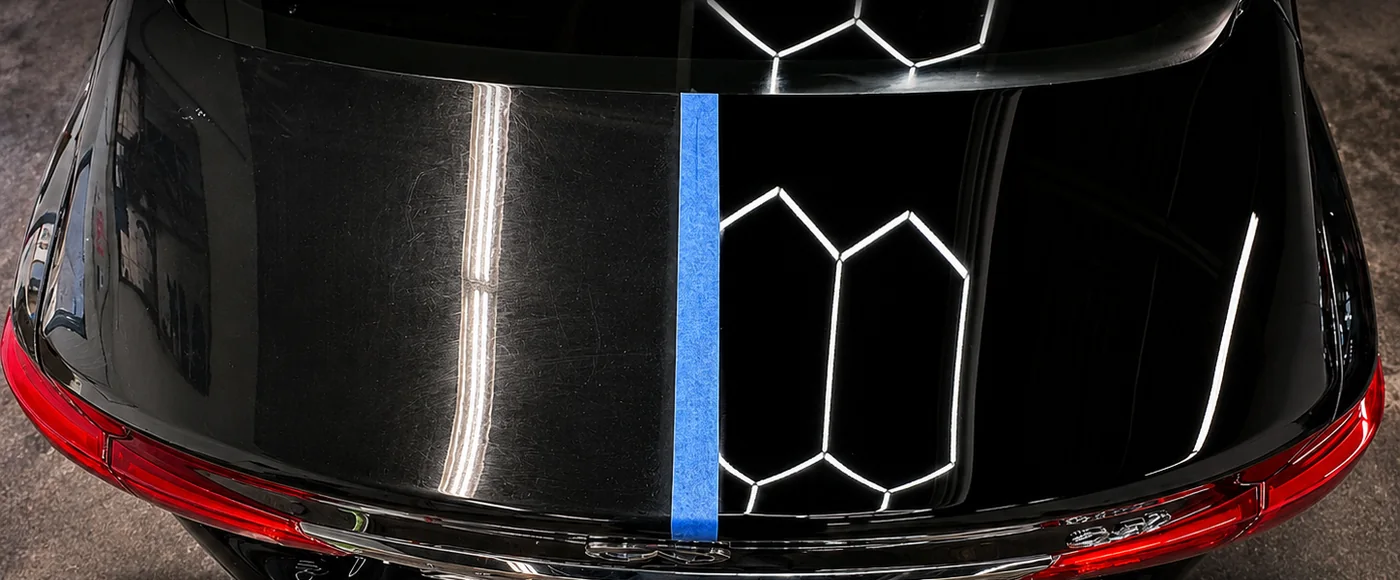
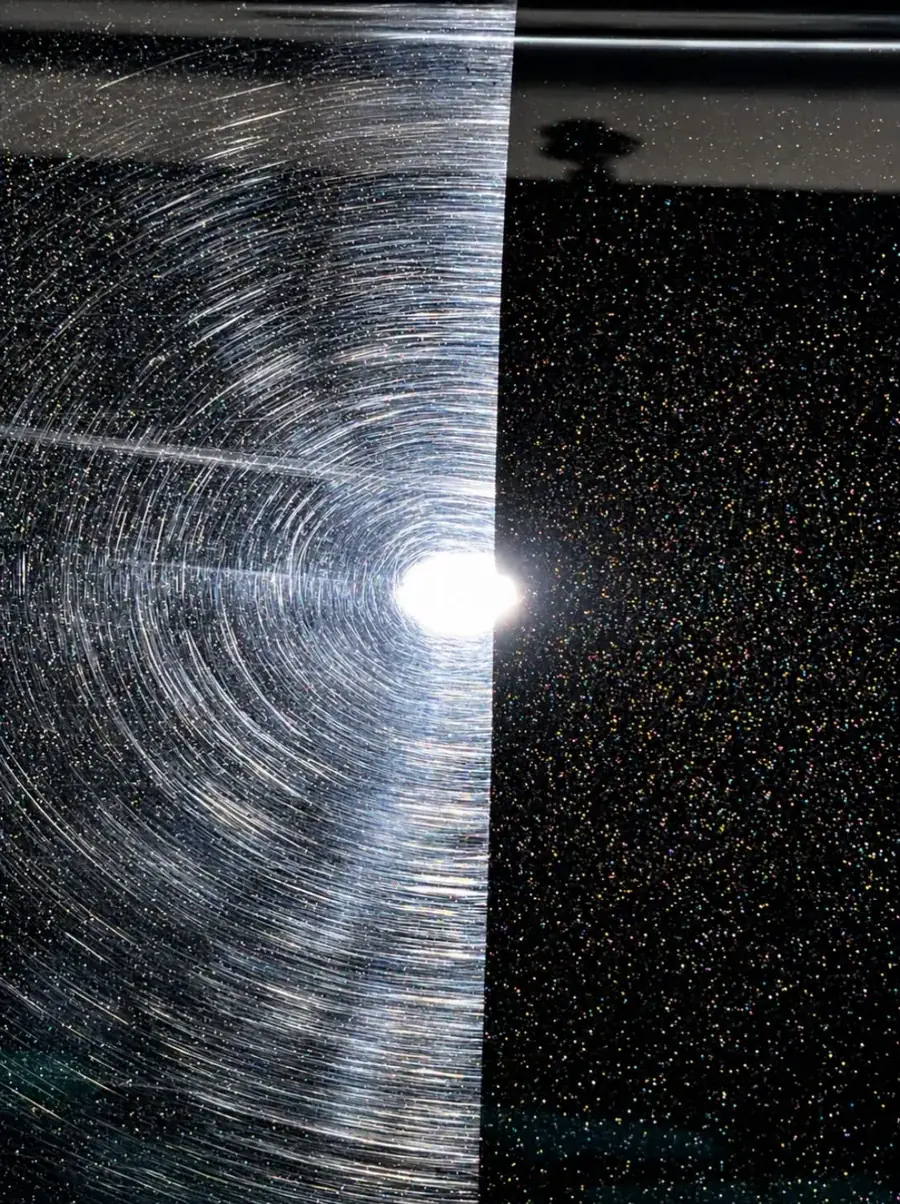
Every wash, every towel, every brush at the drive-through leaves fine scratches in your clearcoat. In daylight they blur together and the car just looks a bit flat. Put a hard light on it and you see what's really there.
 BeforeAfter
 BeforeAfter
So what is "buffing", really?
A machine polisher and a series of abrasives work the surface until it's flat again. Flat paint reflects light in one clean direction instead of scattering it in a thousand. That's why a corrected car looks wet, and why the color suddenly looks deeper.
It's permanent. We're not filling the scratches or hiding them under a glaze that washes out in a month. They're gone.
That's why a ceramic coating goes on afterward. Correction is the work. The coating is what keeps it.
Both of these were multi-stage severe corrections, booked by people who wanted everything possible done to get their car as close to showroom as it gets. Not every job needs four steps. We recommend what gets you the result you're after.
Process
How a job runs.
Quality over speed, always. Clearcoat doesn't grow back, so every job follows the same order.
- InspectEvery panel goes under a raking light so we can see swirls, buffer trails, etching and scratches. That tells us how many stages your paint needs, and we walk you through it before anything starts.
- WashFoam pre-soak to lift grit without dragging it, then a two-bucket contact wash. Most swirl marks were put there during washing, so this step is deliberate.
- DecontaminateIron and fallout remover for embedded brake dust, tar solvent for road grime, then clay. Paint has to be bare before a pad touches it.
- CorrectCompounding to cut the defects, then refining stages to bring back gloss. Test spot first, every time.
- Panel wipe & coatEvery panel stripped of polishing oils so nothing hides a defect or blocks the bond, then the coating laid down level and given its cure time.
- Final inspectionA last pass under inspection lighting. You see the car before you leave and we walk the panels together.
Real work · 50/50 test
See the line for yourself.
One panel taped off down the middle. One side untouched, the other corrected — same paint, same lights, filmed in one take.
This is the test spot we do on every job before the full correction, so you see the result on your own paint first.
Pricing
Quoted on inspection.
Not every car needs four steps. One stage handles light swirling; neglected paint can take up to four. We put the car under the lights, show you what we see, and quote before any pad touches the paint.
$150 deposit holds your date and comes off the final price. If the quote isn't one you want to go ahead with, the deposit is refunded in full.
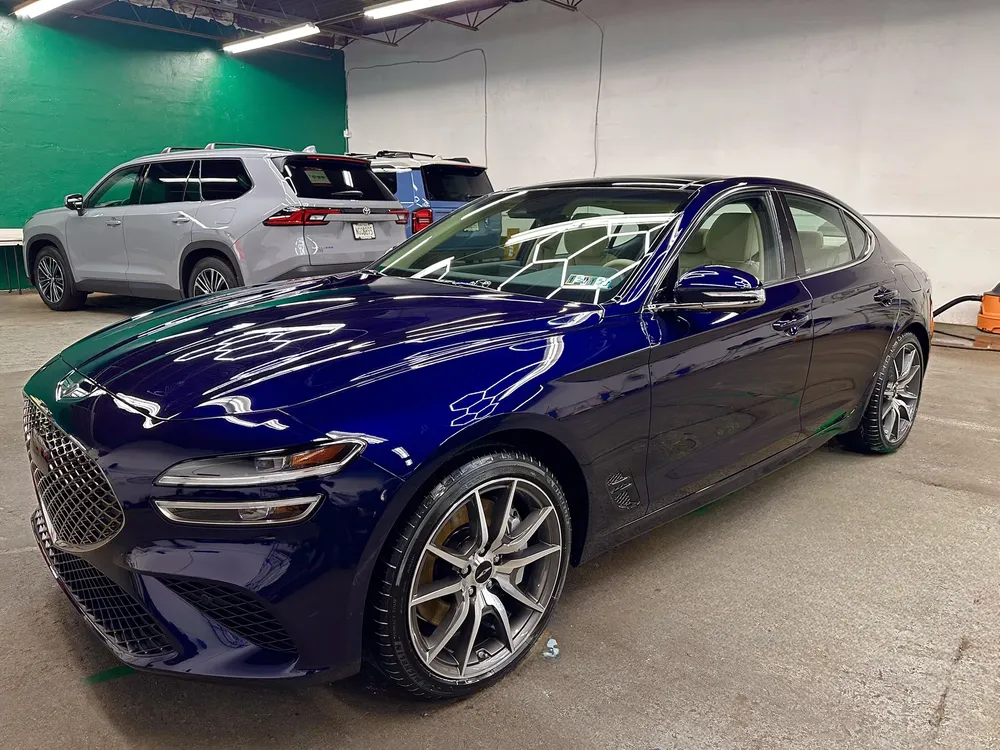 Finished · Genesis G70
Questions
Paint correction Q&A.
Why does my paint look dull if it's clean?
Your paint isn't dirty. It's scratched. Every wash, every towel, every brush at the drive-through leaves fine scratches in your clearcoat. In daylight they blur together and the car just looks a bit flat. Put a hard light on it and you see what's really there.
What is "buffing", really?
A machine polisher and a series of abrasives work the surface until it's flat again. Flat paint reflects light in one clean direction instead of scattering it in a thousand. That's why a corrected car looks wet, and why the color suddenly looks deeper.
Is it permanent, or does it wash off?
It's permanent. We're not filling the scratches or hiding them under a glaze that washes out in a month. They're gone.
How many steps does my car need?
Not every job needs four steps. One stage handles light swirling; neglected paint can take up to four. We recommend what gets you the result you're after, and if that result is showroom, we do everything we can to get it there.
How does a correction job run?
Quality over speed, always. A correction is permanent, because clearcoat doesn't grow back. This is the order every job follows:
- InspectEvery panel goes under a raking light so we can see swirls, buffer trails, etching and scratches. That tells us how many stages your paint needs, and we walk you through it before anything starts.
- WashFoam pre-soak to lift grit without dragging it, then a two-bucket contact wash. Most swirl marks were put there during washing, so this step is deliberate.
- DecontaminateIron and fallout remover for embedded brake dust, tar solvent for road grime, then clay. Paint has to be bare before a pad touches it.
- CorrectCompounding to cut the defects, then refining stages to bring back gloss. Test spot first, every time.
- Panel wipe & coatEvery panel stripped of polishing oils so nothing hides a defect or blocks the bond, then the coating laid down level and given its cure time.
- Final inspectionA last pass under inspection lighting. You see the car before you leave and we walk the panels together.
Why do you recommend a coating after a correction?
A coating seals the corrected finish under a hard layer that takes the wear from washing, weather and road grime instead of your paint. Correction is the work. The coating is what keeps it.
Ready to see it under the lights?
Book an inspection with a $150 deposit. Recommend a coating after? We'll quote both.